

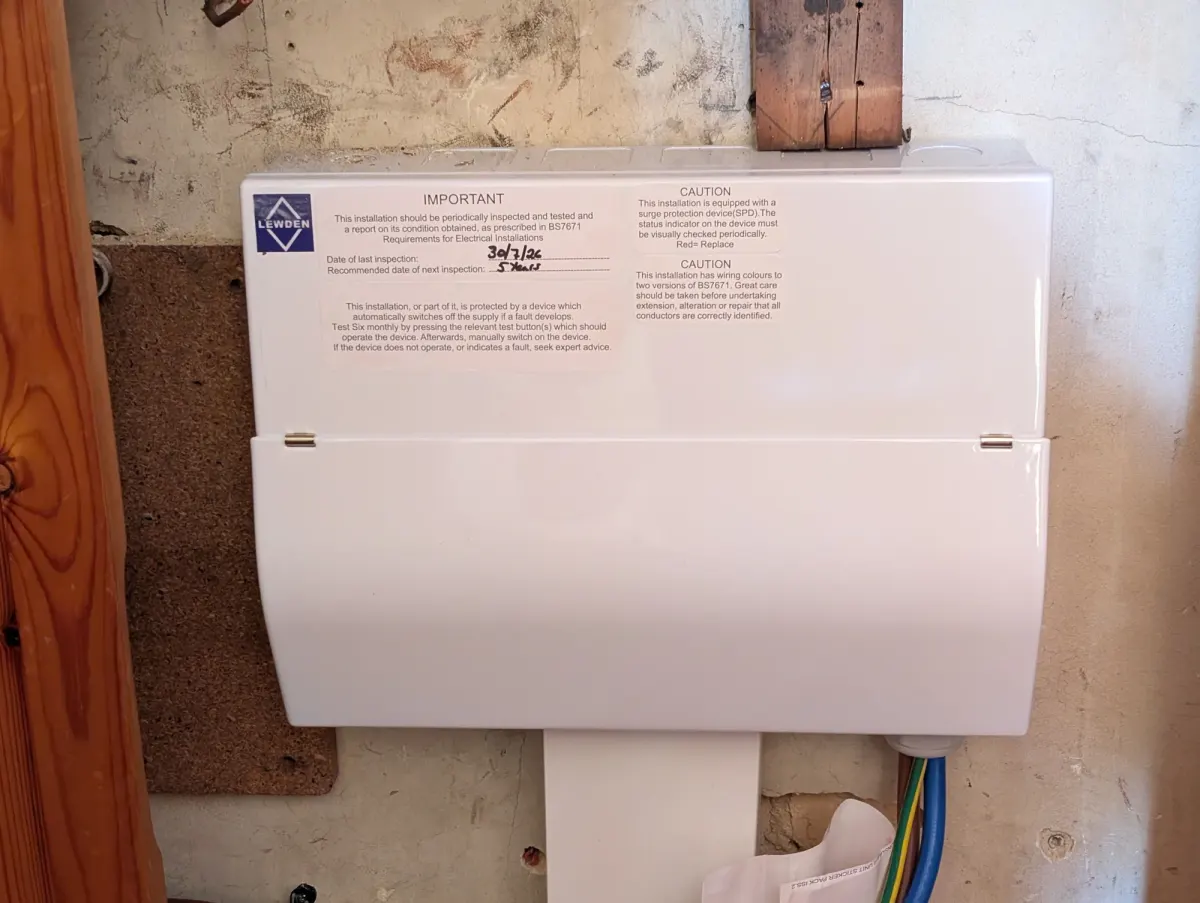
Signs your board is due
Most people never look at their fuse board until something trips. Open the cupboard and have a look. If you see a row of white ceramic fuse carriers, a wooden backboard, or a board with no test button on it at all, it is very likely older than the rules it is supposed to meet.
The other common clues: one fault knocks out half the house, the board feels warm or smells of hot plastic, you can hear a buzz from it, or every slot is full and there is nowhere to add a circuit for a shower, an EV charger or a garden office. Any one of those is worth a call. A burning smell or scorch marks is worth a call today.
Jason wrote up the seven signs he sees most often in a short guide, with photos of what each looks like.

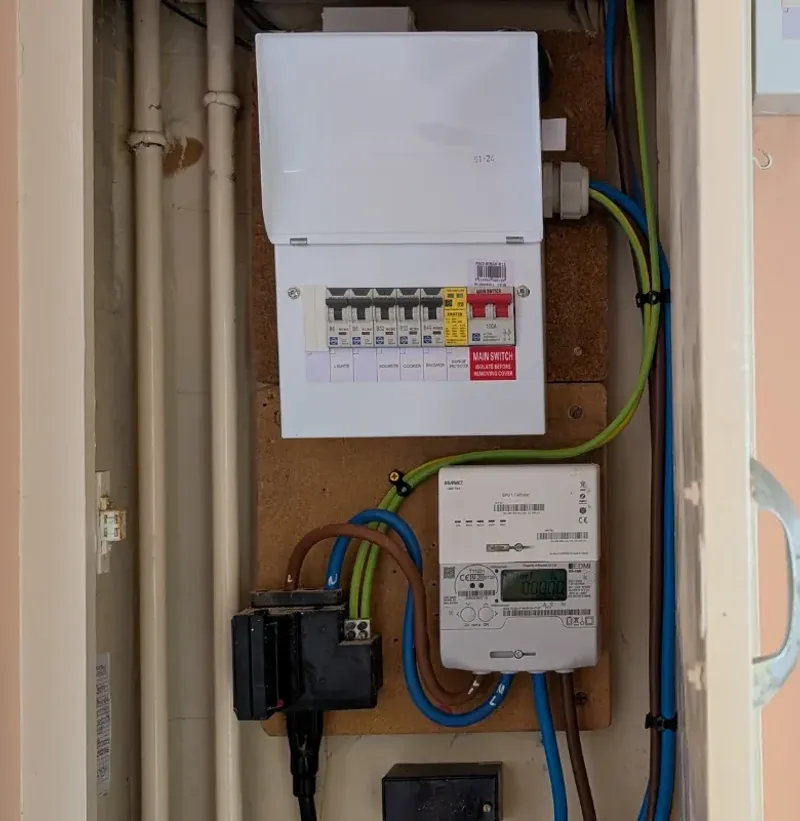
Drag or swipe across the photo to compare, or use your arrow keys.
What actually changes
An old fuse board protects the cables. A modern consumer unit protects the people as well. The RCD side of it watches for current leaking to earth, the kind of fault that happens when someone touches a damaged flex, and cuts the power in a fraction of a second.
Where it makes sense we fit RCBOs, which put that protection on each circuit separately. The practical difference is big: if the kettle develops a fault, you lose the kitchen sockets, not the lights, the fridge and the alarm with them. Finding the faulty appliance becomes a two-minute job instead of an evening with a torch.
Surge protection is an option on every board. It guards TVs, routers, boilers and anything else with electronics in it against spikes on the supply. Jason will tell you honestly whether it is worth it for your house.
How the day goes
You get a fixed quote first, after Jason has seen the board and the house. On the day the power is off for most of the job, so it helps to have phones charged and the freezer kept shut. Most upgrades take four to six hours.
Once the new board is in, every circuit is tested before it is switched back on. If testing turns up a problem on a circuit, such as a borrowed neutral or poor insulation, you are told straight away and shown the readings, rather than finding out from a nuisance trip a week later.
Before Jason leaves he labels every way on the board, talks you through what has changed and how to reset it, and tidies up. The certificate follows, and as an NICEIC approved contractor he notifies the work to building control for you, which is a legal requirement for a new consumer unit.
Landlords, buyers and sellers
A new consumer unit is often the main fix after an EICR on a rental comes back unsatisfactory, and it is one of the first things a buyer's survey flags. If you are letting, selling or have just bought an older home in Poole, sorting the board early saves a rushed job later. Jason can quote for the board and any other remedial work from the same visit.
Price, straight
Upgrades typically start at around £1,000 plus VAT. Bigger houses with more circuits, boards that need moving, or extra work found during testing cost more, and you will know about any of that before it is done. The written quote is free and there is no obligation.
Professional, knowledgeable and experienced electrical services. Great advice and support in all areas. Just had storage heaters removed and consumer unit merged and extremely satsified with the results so far. Would highly recommend !Louise InghamGoogle review, May 2026